


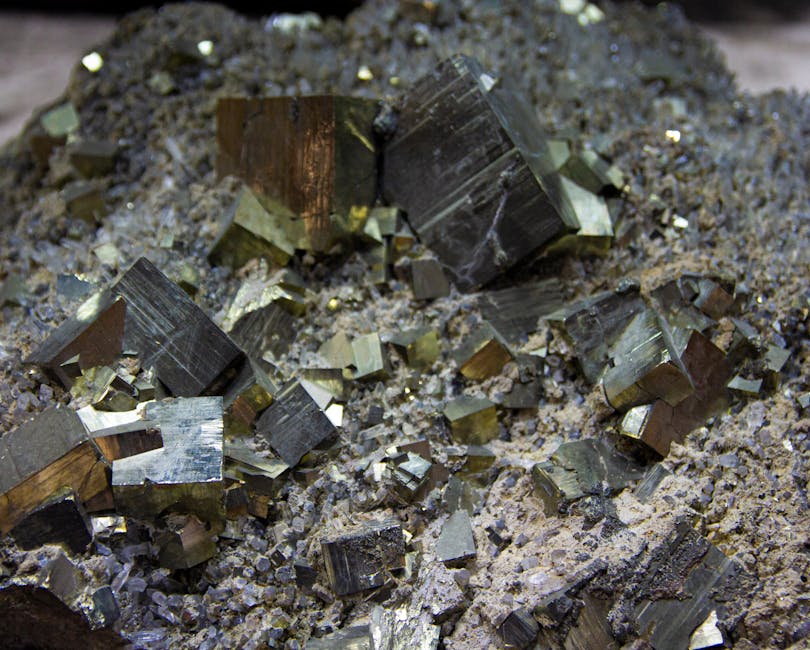
Gold has fascinated humanity for thousands of years, but most investors who buy gold coins or bars rarely stop to think about the extraordinary journey that metal took before it landed in their hands. From a speck of ore buried deep underground to a shining one-ounce bar sitting in your safe, gold passes through a complex chain of extraction, processing, and refining. Understanding that journey can give you a much deeper appreciation for why gold holds its value — and why the physical metal you own represents something genuinely rare and hard-won.
How Gold Deposits Form in the Earth
Gold does not appear randomly underground. It forms over millions of years through geological processes, most commonly when superheated water carrying dissolved minerals forces its way through cracks in rock. As this hydrothermal fluid cools, gold and other minerals crystallize and settle into veins. These veins, often found inside quartz rock, are what miners have chased throughout history. Other deposits form through erosion, where ancient veins break down and gold particles wash into riverbeds, creating what are called placer deposits.
The concentration of gold in the earth’s crust is extremely low. On average, ore that is considered worth mining may contain just a few grams of gold per ton of rock. That scarcity is a fundamental reason gold commands the price it does. A great deal of earth must be moved, processed, and refined before even a small amount of pure gold is recovered.
Major gold-producing countries today include China, Australia, Russia, Canada, and the United States. Nevada, in particular, is one of the most productive gold-mining regions in the world, thanks to its rich geological history and large-scale open-pit operations.
Types of Gold Mining Methods
Modern gold mining falls into two broad categories: surface mining and underground mining. Open-pit mining is used when gold-bearing ore sits close to the surface. Heavy machinery removes enormous amounts of rock in a wide, stepped excavation. This method is efficient for large, low-grade deposits where the sheer volume of ore processed makes recovery economical.
Underground mining is used when deposits are deeper. Miners construct shafts and tunnels to reach ore bodies, then blast and haul the rock to the surface. This method is more expensive and labor-intensive, but it is necessary when surface mining is not practical. Some underground mines extend thousands of feet below ground, requiring sophisticated ventilation, transportation, and safety systems.
A third method, placer mining, recovers gold from riverbeds and alluvial sediments using water and gravity. This is the technique popularized during the California Gold Rush of 1849, when prospectors panned for gold flakes in streams. While small-scale placer mining still occurs, most of the world’s gold today comes from large industrial hard-rock operations.
Processing the Ore: From Rock to Raw Gold
Once ore is extracted, it must be crushed and processed to separate the gold from surrounding rock. The ore is first sent to a crusher, which reduces it to smaller pieces, then to a grinding mill where it becomes a fine powder mixed with water. This slurry is then processed using one of several chemical methods to extract the gold.
The most widely used technique is cyanide leaching, also called the cyanidation process. A dilute cyanide solution is mixed with the ore slurry. Gold dissolves into the solution while most other materials do not. The gold-rich solution is then separated and treated with zinc dust or activated carbon to pull the gold out of the liquid. The result is a solid precipitate that contains gold along with other metals — called doré.
Doré is a semi-pure alloy of gold and silver, sometimes with trace amounts of other metals. It is the form in which gold leaves the mine. Doré bars are then shipped to refineries, where the real precision work begins.
The Refining Process: Achieving Investment-Grade Purity
Refining is the final step that transforms raw doré into the highly pure gold found in investment-grade bars and coins. The two most common refining methods are the Miller process and the Wohlwill process.
The Miller process involves blowing chlorine gas through molten doré. Chlorine reacts with silver and other impurities, turning them into chloride compounds that float to the surface as slag and are removed. This process can achieve purity of up to 99.5%, which is sufficient for many applications but not quite at the highest investment standard.
The Wohlwill process uses electrolysis to push purity even higher, achieving 99.99% pure gold — commonly referred to as “four nines fine.” The doré or Miller-process gold is submerged in an electrolytic solution, and an electrical current causes pure gold to deposit onto a cathode while impurities remain in solution. This is the process used to produce the gold that meets the standards of major commodities exchanges and bullion dealers worldwide.
From Refinery to Bullion Products
Once refined, gold is cast or minted into the products investors recognize. Poured bars are made by pouring molten gold into molds. Minted bars are cut from rolled sheets of gold and then pressed with designs and markings for precision and appearance. Government mints around the world — such as the U.S. Mint, the Royal Canadian Mint, and the Perth Mint — use refined gold to strike official bullion coins like the American Gold Eagle and the Canadian Gold Maple Leaf.
Each finished product carries markings that indicate its weight, purity, and often its mint of origin. These hallmarks are your assurance that the gold meets the standards it claims. Reputable dealers source products only from accredited mints and refineries, ensuring that every bar and coin has a clear and verifiable chain of custody.
At Absolute Bullion, every gold product offered has passed through this rigorous global production chain. Customers can shop with confidence knowing they are receiving authentic, investment-grade bullion backed by internationally recognized standards.
Why the Production Process Matters to Investors
Understanding how gold is produced helps explain why it cannot simply be manufactured on demand. Every ounce requires significant capital investment, energy, labor, environmental management, and technical expertise. Mining companies must locate deposits, secure permits, build infrastructure, and operate responsibly before a single bar reaches the market. That constraint on supply is one of the factors that has helped gold maintain purchasing power over long periods of time.
The lengthy and costly production process also reinforces why counterfeit or substandard gold is a serious concern in the market. Knowing where your gold comes from and buying from verified sources is not just smart — it is essential.
Conclusion: Start Your Gold Journey with Confidence
From ancient ore veins deep in the earth to a gleaming coin in the palm of your hand, gold’s journey is one of the most remarkable in the natural and industrial world. That journey takes millions of years of geology, months of extraction, and days of precision refining — all to produce something that fits in your pocket but represents lasting, tangible value. When you understand what goes into every ounce, your investment feels less like a purchase and more like ownership of something genuinely irreplaceable.
Ready to own a piece of that remarkable story? Visit absolutebullion.com to browse our full selection of gold bars and coins at current spot price, with transparent pricing and secure shipping to your door.